Key takeaways
- Match the format to the goal
- Real people beat actors
- Directing an executive who has never been filmed
- Arabic, English or both
- Filming in offices, factories and free zones
Most corporate videos fail before the camera is even switched on.
The reason is almost always the same: nobody decided what the film is for. A company profile, a CEO message, a recruitment film and a customer testimonial are four different films, and a brief that asks for "a corporate video" usually gets a bit of each and none of them done well. I direct and shoot brand and corporate films in Dubai and Paris. This guide to corporate video production in Dubai covers what I'd want every marketing, HR or comms team to decide before booking: the format, the people on camera, the languages, the permits and the sign-off.
Short answer: corporate video production in Dubai works best when you pick one format per goal (company profile, leadership message, recruitment, testimonial, explainer or event recap), film real staff in interviews rather than actors reading lines, decide early between Arabic, English or both, sort out the filming permit and the building's approval, and name one person who signs off. Most projects take three to six weeks and cost AED 10,000 to 30,000.
Match the format to the goal
Start from the question "what should someone do after watching this?" Then pick the format that gets them there.
- Company profile film. Two to three minutes. Who you are, what you do, why it matters. It lives on your website, in investor decks and in tender submissions, so it needs to age well: no references to this year's campaign.
- Leadership message. Sixty to 120 seconds, one person, one message. Results, a strategy change, a milestone. Many Dubai companies record one for UAE National Day on 2 December, so book the executive's time in early November.
- Recruitment and employer brand. Sixty to ninety seconds plus short clips. Real employees talking about their actual day. Candidates can tell instantly when a team has been staged.
- Customer testimonial or case study. One to two minutes. The client explains the problem, what you did and what changed. It's the most persuasive film a B2B company can make, and the hardest to schedule, because it depends on someone else's calendar.
- Product or service explainer. Sixty to ninety seconds, live action, showing the thing working. If it needs animation to make sense, that's a different brief.
- Event recap. Conferences, launches, galas. That job has its own checklist, which I've covered in hiring an event videographer in Dubai.
Then plan the cut-downs on day one. A two-minute master, a 30-second version, a 15-second version and vertical 9:16 clips for LinkedIn and Instagram all come from the same shoot, but only if the crew frames for them. Add burned-in subtitles to every social cut: most people watch muted at their desk.
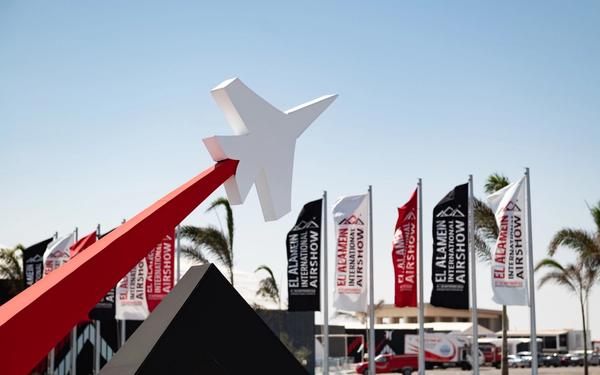
At the El Alamein International Airshow (EIAS 2026) in Egypt, the brief for Orchestra Media and Bridge Exhibitions was daily cuts during the show and a full film afterwards. I recorded around ten interviews over three days, and because the daily cuts were planned from the start, the final film had the time and material it needed.
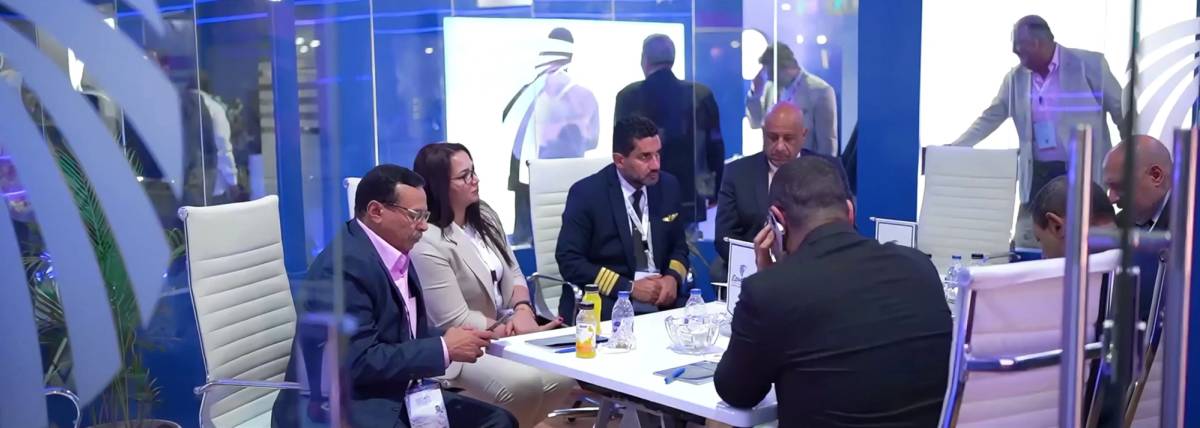
A meeting at a stand at EIAS 2026, filmed for Orchestra Media and Bridge Exhibitions.
Real people beat actors
Unless you're making an advert, use your own people. Viewers trust a slightly nervous engineer more than a polished actor saying the same words.
For Mount Med, a longevity resort in Tyrol, the film has no actors at all. Six people from the team are on camera: the general manager, who carries most of the story, the fitness manager, a massage therapist, the receptionist, the chef de rang and the chef.
How to get good material from people who aren't used to cameras:
- Send the questions, not the answers. If people learn a script, they recite it. If they know the topics, they talk.
- Interview, don't read. I sit next to the camera and have a conversation. The interviewee looks at me, not the lens, and forgets about the crew after a few minutes.
- Ask the important question twice. The second answer is almost always shorter and better.
- Film them doing their job. Ten minutes of someone at work is worth more than any posed shot of them smiling at a screen.
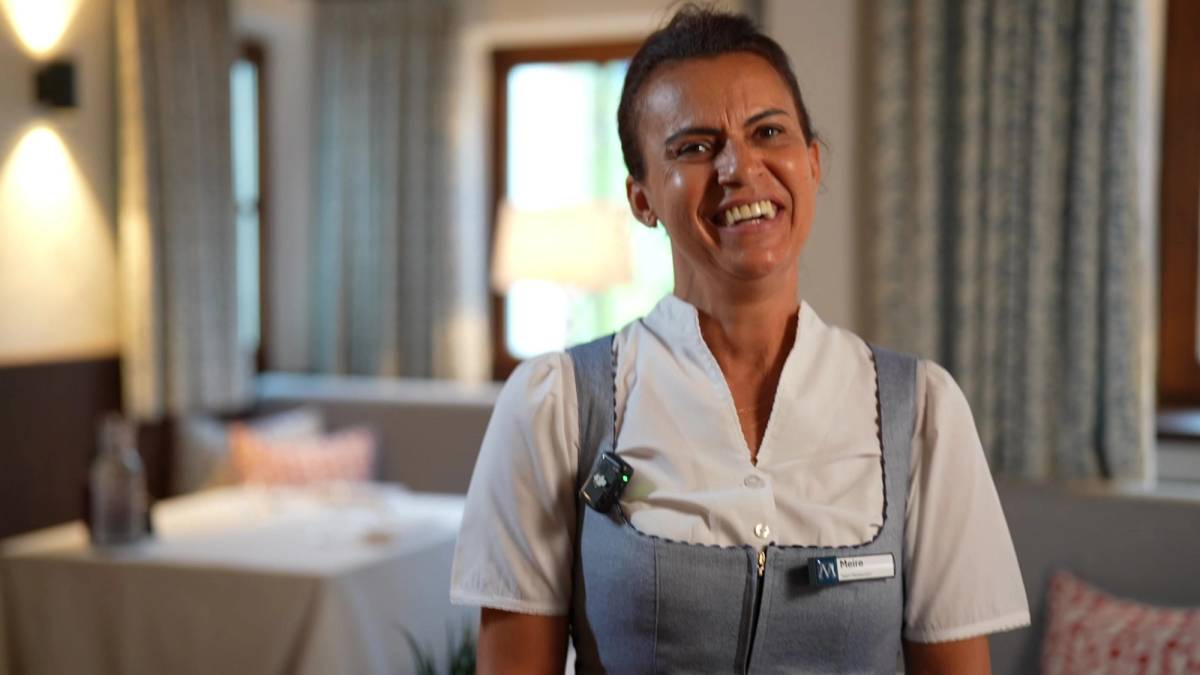
A Mount Med team member between questions. The best answers usually come right after a laugh.
Directing an executive who has never been filmed
The CEO slot is usually the shortest and the most important part of the shoot. A few things make it work:
- Book 45 minutes and plan to use 20. Set up and light the room before they arrive, so their time goes on answers, not cables.
- Morning beats afternoon. People are fresher, and the calendar hasn't fallen apart yet.
- Teleprompter or interview? Test it. Some executives read naturally, most don't. An interview cut into a message almost always sounds more like a person.
- Wardrobe. Plain, mid-tone colours. No fine stripes or small checks, which shimmer on camera, and bring a second option.
- One person in the room from your side. Not five. Every extra person makes the speaker perform for the room instead of talking to the camera.
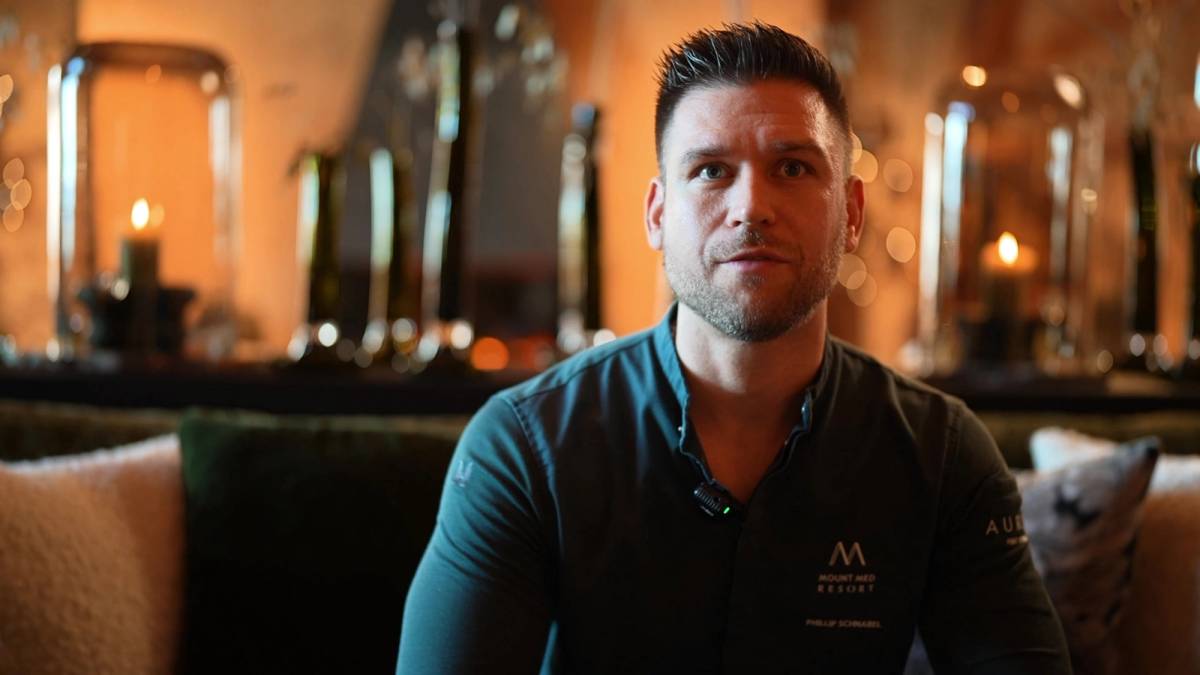
Phillip Schnabel, Mount Med's executive chef, interviewed on a sofa in the resort's lounge.
Arabic, English or both
In Dubai, this decision changes the shoot, so make it before booking.
- Film each person in the language they're most comfortable in. A fluent answer in Arabic with English subtitles beats a hesitant answer in English.
- Subtitles are the default. They're cheaper than voice-over and keep the real voice. Arabic subtitles need right-to-left typesetting and a native speaker to proofread them, so budget the time.
- Voice-over suits explainers and company profiles where nobody appears on camera speaking.
- Recording twice, once per language, works for short leadership messages if the executive is truly bilingual. It doubles the time in front of the camera, not the crew cost.
- On-screen text and graphics need both versions too, which is easy if it's planned and painful if it isn't.
Filming in offices, factories and free zones
Your own premises feel simple. Legally and practically, they need some preparation.
Permits. Executive Council Resolution No. 50 of 2014 makes the Dubai Film and TV Commission the body that licenses filming in Dubai, indoors and outdoors, offices and free zones such as DIFC included, and the location's approval is part of it. Your office counts as a private location: you need the DFTC permit and the building's own approval, which usually covers the crew, the equipment and the loading bay. I've covered the process in my guide to filming permits in Dubai.
Consent. Under Article 44 of the UAE's Federal Decree-Law No. 34 of 2021, recording people without their consent with intent to breach their privacy is an offence, and the UAE's data protection law treats a person's image and voice as personal data. Get a signed release from every employee on camera, even colleagues who are happy to help, and decide in advance what happens to the film if someone leaves the company. In DIFC, the DIFC Data Protection Law applies instead of the federal one. This isn't legal advice: ask your legal team to approve the release form.
Confidential material. Screens, whiteboards, documents on desks and badges with names. Walk the set before the crew arrives and clear what shouldn't be seen. If the crew will see sensitive areas, sign an NDA with the production company, not with each freelancer separately.
Factories and sites. Expect a safety induction, PPE for the whole crew and zones where you can't film or can't bring certain equipment. Ask for the site rules a week before the shoot.
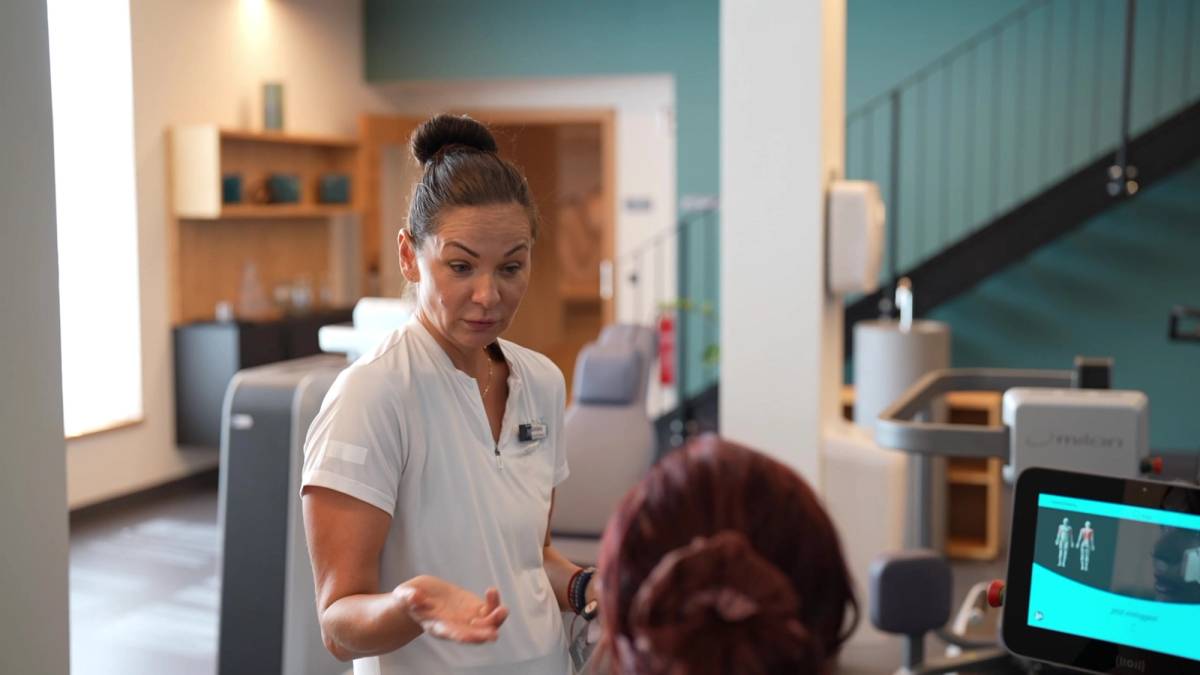
Danijela Peer, Mount Med's fitness manager, with a guest in the training room. On your own premises, everyone in frame signs a release, guests included.
Sign-off without endless rounds
Corporate films have more stakeholders than any other kind of video. That's fine, as long as they comment at the right moment.
- Legal and compliance review the script or interview questions, not the finished edit. Changing a sentence on paper is free. Changing it after the shoot can mean filming again.
- One person signs off the edit, and collects everyone else's comments into one list.
- Agree the number of review rounds before the shoot. Two is normal.
- Send the brand guidelines early: logo files, fonts, colours and the end card.
- Use licensed music only. A track you don't have the rights to gets muted on social platforms, often the day you post.
How long it takes
For most corporate films, three to six weeks from brief to delivery:
- Week one: brief, format and treatment.
- One to two weeks: pre-production. Interviewees, questions, locations, permits, building approvals, release forms. Apply for the permit in week one: it has the longest lead time.
- One or two shoot days. Most company profiles fit in one well-planned day.
- One to two weeks: edit, subtitles, graphics, review rounds and the cut-downs.
A leadership message can be delivered within a week of the shoot if the executive's slot and the permit are already in place. Plan around Ramadan, when private-sector working hours are two hours shorter a day by law. In 2027 it's expected to start around 8 February. In summer, keep any outdoor shots out of the midday heat.
What it costs
Corporate videos in Dubai usually cost AED 10,000 to 30,000, depending on the number of locations, interviewees, languages and cut-downs. The full breakdown, with what pushes a quote up, is in my guide to what video production costs in Dubai.
Corporate video production in Dubai: FAQ
How long does it take to make a corporate video in Dubai?
Three to six weeks for most projects: about a week for the brief, one to two weeks of pre-production, one or two shoot days, then one to two weeks of edit and review. A short leadership message can be delivered within a week of the shoot.
How much does a corporate video cost in Dubai?
Usually AED 10,000 to 30,000. The price depends on locations, the number of people interviewed, languages, graphics and how many cut-downs you need.
Can you film our employees and management team?
Yes, and it's usually the strongest choice. Get a signed release from everyone on camera, send them the topics rather than a script, and film them in an interview rather than reading to camera.
Do we need a permit to film in our own office in Dubai?
Yes, in most cases. Dubai's filming rules cover indoor locations, offices included, and a private location needs the filming permit plus the owner's approval. Most office buildings also have their own rules for crews and equipment.
Can the video be in Arabic and English?
Yes. Film each person in the language they're most comfortable in, then subtitle. Arabic subtitles need right-to-left typesetting and a native proofreader. Short leadership messages can be recorded twice if the speaker is bilingual.
How long should a corporate video be?
Two to three minutes for a company profile, sixty to 120 seconds for a leadership message or testimonial, and 15 to 30 seconds for social cuts. If a film runs longer, it's usually trying to be two films.
Can one shoot give us content for social media too?
Yes, if it's planned before the shoot. Ask for a 16:9 master plus 30-second, 15-second and vertical 9:16 versions, all with burned-in subtitles.
Planning a corporate film in Dubai?
Send me what the film is for, who should be in it and your deadline, and I'll tell you how I'd make it. You can see more of my work on the page for Tanit Studio, my video production company in Dubai, and how I built a whole brand film around real people in the Mount Med case study.