
Key takeaways
- Watch a full film, not a demo reel
- The 7 questions to ask before you sign
- The red flags you should not ignore
- Amateur or professional: what actually changes
- Price is not the real problem, vagueness is
To choose a good wedding videographer, ask to see a full film rather than a teaser, check how they record sound, insist on backup gear and a written contract, and be wary of prices that look too good to be true. Here is how to apply each of those instincts, and how to spot the ones you should not trust with your day.
Most couples pick their wedding videographer from a 90-second demo reel. That is usually where things go wrong.
Those 90 seconds are the best shots from dozens of weddings, cut to a trending track and graded so everything glows. They tell you almost nothing about how that person films a real day, from the morning prep to the last dance. And six months later, plenty of films end up on a hard drive nobody opens, because they look pretty but feel like they belong to someone else.
I have been making films for years, between Paris and Dubai, and I have watched this play out more times than I can count. Here is how to find a videographer you can trust, and how to spot the ones to avoid.
Watch a full film, not a demo reel
Ask to see a complete ceremony film, 15 to 20 minutes, start to finish. Not a teaser.
A demo reel is built to impress. A full film shows the truth: how the videographer handles the slow moments, the father adjusting his tie before he walks his daughter down the aisle, the best man losing his place mid-speech, the quiet look between the couple at dinner when nobody else is watching. If those moments are missing, or if they feel rushed, you already know how this person works.
A good videographer will be glad to show you a whole film. The one who only has teasers is usually hiding something.
The 7 questions to ask before you sign
Ask these at the first meeting. The answers will tell you almost everything.
- Can I see a full wedding film, not just a teaser? The answer should be yes, right away, with a link to a complete film.
- How do you handle audio? A serious videographer records sound independently: lapel mics on the couple and the officiant, an ambient mic, and sometimes a direct feed from the venue sound desk. If someone says the on-camera mic is enough, walk away. Bad audio ruins a film faster than shaky footage.
- Who films on the day, you or someone else? Some people sell you their portfolio and then send a subcontractor you have never met. You should know exactly who is behind the camera at your wedding.
- What happens if your gear fails? There is a right answer: a second camera body, dual card recording, backup batteries and mics. A memory card fails with no backup, and part of your day is gone for good.
- What is the delivery time, and in what format? Ask for a real date, not a vague "a few months". Ask what you actually receive too: a teaser, a highlight film, a full ceremony edit, the high-resolution files.
- How many versions or revisions are included? The word "unlimited" often hides a lack of process. One or two defined rounds beat a fuzzy promise that drags on for months.
- What does the quote cover, and what triggers an extra charge? Coverage hours, travel, drone, same-day edit, second camera. All of it should be written down before you sign.
The red flags you should not ignore
A few warning signs show up in almost every bad experience. If you see several, slow down.
- A suspiciously low price. A full cinematic film for the price of a nice dinner is not a deal. It is a project where corners get cut on gear, sound, or editing, and the result will show it.
- Only teasers, never a full film. You know this one by now. It is the clearest signal of all.
- Coming alone to a multi-location, 200-guest wedding. One person cannot be in two places at once. Prep in one suite, ceremony somewhere else, reception in a third venue: that often needs two people.
- "Unlimited revisions" with no clear process. Sounds generous, rarely ends well.
- No written contract or formal deposit. A professional works with a contract that protects both sides. Its absence is a red flag.
- Audio recorded on the camera mic. Repeated here because it is the most common mistake, and the most damaging.
Amateur or professional: what actually changes
The difference almost never comes down to the price of the camera. It comes down to everything around the shot.
- Audio. Amateur: the on-camera mic. Professional: lapel mics on the couple and the officiant, an ambient mic and sometimes a direct feed from the venue sound desk.
- Backup gear. Amateur: none or limited. Professional: a second body, dual card recording, spare batteries and mics.
- Insurance. Amateur: rarely. Professional: professional liability cover.
- Editing. Amateur: a stock template and generic music. Professional: a built narrative and a custom color grade.
- Difficult light. Amateur: endured. Professional: anticipated and controlled.
- Deadlines. Amateur: vague. Professional: set in the contract.
A professional videographer is not selling you a camera. They are selling a day that is covered and a film you will want to watch again in ten years.

Price is not the real problem, vagueness is
In France, a wedding film usually runs from 800 to 1,500 euros for a simple package, 2,000 to 3,500 euros for full coverage, and 3,500 to 6,000 euros or more for a cinematic production with a crew and careful post-production.
What matters is not the number, it is the clarity. A detailed quote, where every line is justified, beats a cheap flat rate nobody can explain. I wrote a full pricing guide if you want to understand what pushes the price up or down: how much a wedding videographer costs in 2026.
How I work
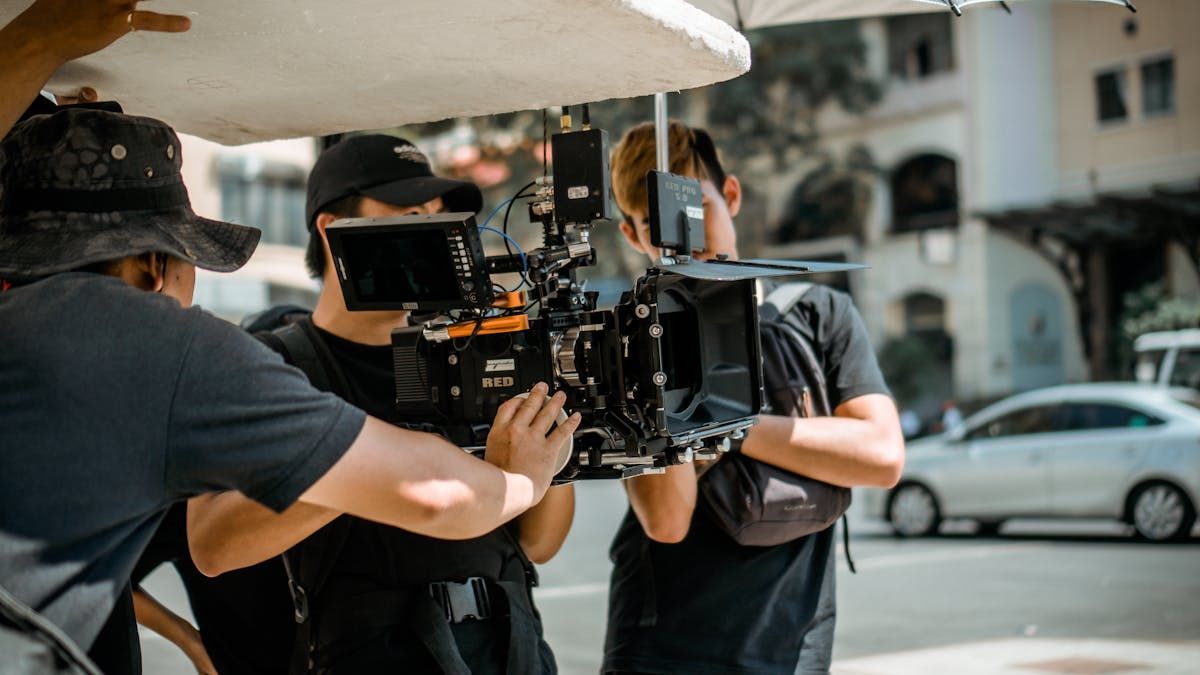
I treat your wedding like a small film production. Not in the sense of staging it, but in the sense of craft: cinema cameras, prime lenses, independently recorded sound, considered framing, and an edit that gives your story room to breathe.
I am based between Paris and Dubai, and I film weddings across France, from intimate elopements at a Paris city hall to grand celebrations in chateaux. You can see my approach on my Paris wedding videographer page, the full range of what I offer on the services page, and recent work in my cases.
Frequently Asked Questions
How do I recognize a good wedding videographer?
A good videographer shows you a full ceremony film, records audio independently, works with backup gear, and gives you a clear contract before starting. If those four things are in place, you are already in good hands.
Do I need one or two videographers for a wedding?
It depends on the scale of the day. An intimate wedding at a single venue can be covered by one person. As soon as there are multiple locations, a large guest list, or simultaneous prep, two people make sure nothing is missed.
How far in advance should I book my wedding videographer?
Ideally six to twelve months before the date, especially for a peak-season wedding between May and September. The good ones get booked early.
Can you use a drone to film a wedding in France?
Yes, but drone use is governed by French regulations. The pilot has to follow the flight rules and stay within authorized zones. A serious videographer knows these rules and flies in compliance. Check this point if drone footage matters to you.
What is the difference between a wedding videographer and a cameraman?
A cameraman films what happens. A videographer, or filmmaker, builds a film: they think about light, sound, editing, and story. The first documents the day, the second tells it.
The day is over in a few hours. The film stays. If you are planning a wedding in Paris or elsewhere in France and want to talk it through, reach out. I reply within 24 hours, no obligation.