
Key takeaways
- The legal reality, plainly
- Filming permits: the part nobody mentions
- Paris hour by hour: where and when to film
- What an elopement changes, for the film
- What to budget
If you do not live in France, you almost certainly cannot legally marry in Paris.
I am saying it first because it is the thing most couples find out too late. French law requires at least one partner to live in the commune where the marriage takes place, continuously, for roughly a month before the banns are published. A tourist stay does not count. And a legal wedding at the Eiffel Tower does not exist: in France, only a civil ceremony held at a town hall by a civil officer carries legal weight.
This is not bad news, it is just a matter of sequence. The vast majority of international couples handle the legal step at home, then come to Paris for a symbolic ceremony. And that is the real day: the one you live, the one your people see, the one I film.
I am a filmmaker based between Paris and Dubai, and I film elopements across Paris. Here is what to know before you book anything.
The legal reality, plainly
Three points cover it:
- The civil ceremony is the only legal marriage in France. It happens at a town hall, performed by the mayor or a deputy, in a room open to the public. No religious or symbolic ceremony has legal standing on its own.
- The residency condition blocks most foreign couples. You need a real address link to the commune, continuously for about a month, plus ten days of published banns. For a couple travelling in, that is rarely workable.
- A symbolic ceremony has none of these constraints. No residency, no banns, no file to submit. You choose the place, the officiant, the structure, and the hour.
French couples do not face this problem: they marry at their own town hall, and many follow it with a ceremony for two somewhere in Paris, the same day or the next.
One piece of honesty: I film, I am not a lawyer. Rules shift and apply differently by nationality. Check your own situation with the relevant town hall or your consulate before fixing a date.
Filming permits: the part nobody mentions
This is where I can actually be useful, because most guides get this wrong.
Filming in Paris public space does not always require a heavy permit. It depends on the setup and the location.
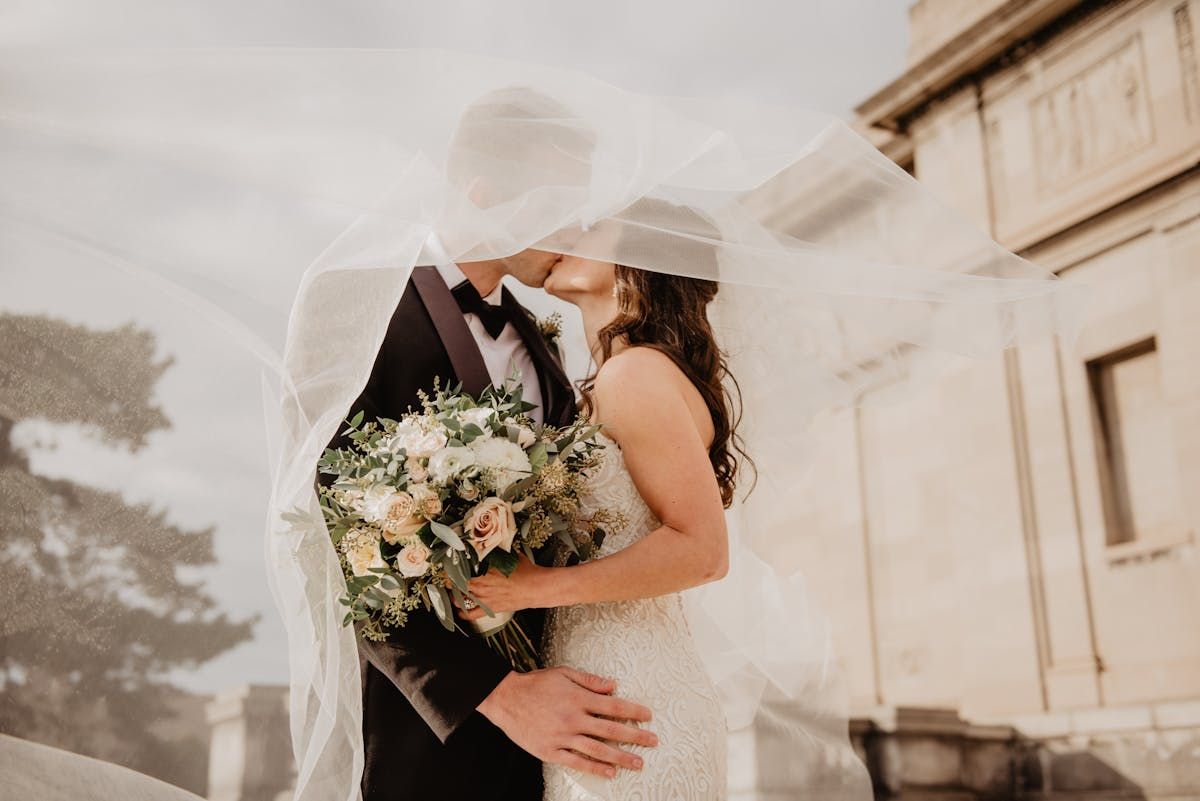
For a light crew on Paris streets and bridges, a prior filming declaration is enough. It is free, it covers small teams (fewer than ten people) using handheld or tripod-mounted equipment, with no parking request and no impact on traffic. It is filed about five business days ahead with Paris Film, the City of Paris film office.
But it only covers streets and bridges. Parks and gardens, the riverbanks, the canals, the Seine itself, and building interiors all fall outside it and need a full authorization, with a longer lead time of around fifteen business days, and sometimes a fee.
In practice, that means a shot on Pont Alexandre III and a shot inside the Tuileries gardens are two different procedures. A videographer who works in Paris regularly knows this distinction. If yours never raises it, ask.
Worth adding: at a private venue, a chateau, hotel, restaurant, or rooftop, the venue's permission is what matters and no city process applies.
Paris hour by hour: where and when to film
The classic Paris elopement mistake is choosing a location without choosing an hour. In Paris, the hour matters more than the place.
Sunrise, roughly 6am to 8am in summer. It is the only time Trocadéro belongs to you. That same terrace at 6pm is a crowd, street vendors, and zero privacy. At dawn, the light hits the Eiffel Tower head on, the air is still, and the sound is clean, which matters enormously if you are exchanging vows. This is the slot I recommend most often.
Mid-morning, for the town hall. If you are having a civil ceremony, it runs on the mairie's hours. Paris wedding rooms are often beautiful, with high ceilings and good window light. I have filmed in the 4th arrondissement, and the walk afterwards through the Marais streets is often worth more than the ceremony itself.
Golden hour, the thirty minutes before sunset. The Tuileries, with the view running toward the Arc de Triomphe. Place des Vosges and its brick arcades. Île Saint-Louis and the quays. This is when Paris stone turns gold and faces look their best.
Blue hour, just after sunset. Pont Alexandre III as the lamps come on, or the quays facing the Eiffel Tower. And if you stay into the night, the tower sparkles for five minutes at the top of each hour. That is a shot I often save for the end of a film.
One practical note: build the day around two or three locations at most. Paris is dense, but moving through it is slow. Three places filmed properly beat six rushed.
What an elopement changes, for the film
A big wedding is filmed by disappearing. An elopement is not. There are only two of you, there are no guests to blend behind, and the filmmaker is part of the day.
That changes three things.
Sound matters even more. With no speeches and no reception room, what remains is your vows and the sound of the city. I record voices on independent mics, never on the camera, or you get traffic instead of words.
The film is shorter and denser. Five to eight minutes is plenty. There is no dinner to cover, no first dance. What counts is the walking, the looks, the words.
Weather is not a problem. Paris in the rain, wet cobblestones reflecting the streetlights, gives you images bright sunshine never will. Bring a clear umbrella and drop the backup plan.

What to budget
The civil ceremony at a town hall is free in itself. Paperwork, translation, and legalisation costs vary a great deal by nationality and need checking case by case.
On the filming side, the logic differs from a full wedding. An elopement needs fewer hours on the day, but the same preparation and post-production. Many couples choose four to six hours of coverage rather than a full day. I broke the pricing structure down in my guide on how much a wedding videographer costs in 2026.
And if you are torn between a photographer and a videographer for a day for two, my answer is the same as for a large wedding, and I set it out here: wedding photo or video.
The mistakes I see most
- Believing a legal wedding at the Eiffel Tower is possible. It is not. Only a town hall produces a marriage.
- Booking Trocadéro for 6pm. You will share the frame with hundreds of people.
- Stacking locations. Six spots in a day is a race, not a wedding.
- Ignoring permits. It takes a week to sort if you think of it, and never if you do not.
- Leaving sound to the camera. In a city, that guarantees you lose your vows.
How I work on an elopement
I treat the day like a short film: cinema cameras, prime lenses, independently recorded sound, and an edit that keeps your voices at the centre. I scout the locations and the light beforehand, and I handle the filming declarations where they are needed.
You can see my approach on my Paris wedding videographer page and recent work in my cases. If you are looking for a reception venue for a full wedding instead, I wrote a separate guide on the best Paris and Île-de-France venues to film in.

Frequently Asked Questions
Can foreigners legally get married in Paris?
Only if at least one partner has lived in the commune continuously for about a month before the banns are published. For a couple travelling in, that is generally not workable. The large majority of international couples marry legally at home and hold a symbolic ceremony in Paris.
Is a symbolic ceremony in Paris legally binding?
No. In France, only a civil marriage performed at a town hall by a civil officer is legally valid. A symbolic ceremony has no legal standing, which takes nothing away from it emotionally.
Do you need a permit to film an elopement in Paris?
It depends on the location and the setup. For a light crew on streets and bridges, a free prior filming declaration is enough, filed about five business days ahead. Parks, gardens, riverbanks, canals, and building interiors require a full authorization with a lead time of around fifteen business days.
What is the best time of day for a Paris elopement?
Sunrise for busy landmarks like Trocadéro, and golden hour late in the day for gardens and quays. In summer that means around 6am and around 9pm. In winter the window is far shorter.
How many locations should you plan in one elopement day?
Two or three at most. Paris is dense but slow to cross, and one location filmed well beats three passed through at a run.
An elopement is not a smaller wedding. It is a wedding with everything that is not the two of you stripped out. If you are planning yours in Paris, reach out. I reply within 24 hours and I will tell you honestly what is achievable in the time you have.